The self-adhesive label printing industry in China has experienced rapid growth in recent years. Due to significant regional differences, diverse user needs, wide application areas, and varying levels of equipment and technological development, China’s self-adhesive label printing market can generally be categorized into four major tiers: Basic, Intermediate, High-End, and Premium.
This article provides a systematic overview of each tier, along with its core characteristics, printing technologies, and customer groups—helping brands, suppliers, and industry professionals better understand the structure of China’s label printing industry.
Ⅰ. Basic-Level Self-Adhesive Labels
Key Characteristics
Basic-level label products focus on simple designs, including text, basic borders, and general report-style layouts. They feature:
- Low printing complexity
- Minimal quality requirements
- Large production quantities with limited variation
- Competitive pricing due to low printing costs
These labels are primarily used for secondary printing, such as handwriting or overprinting.
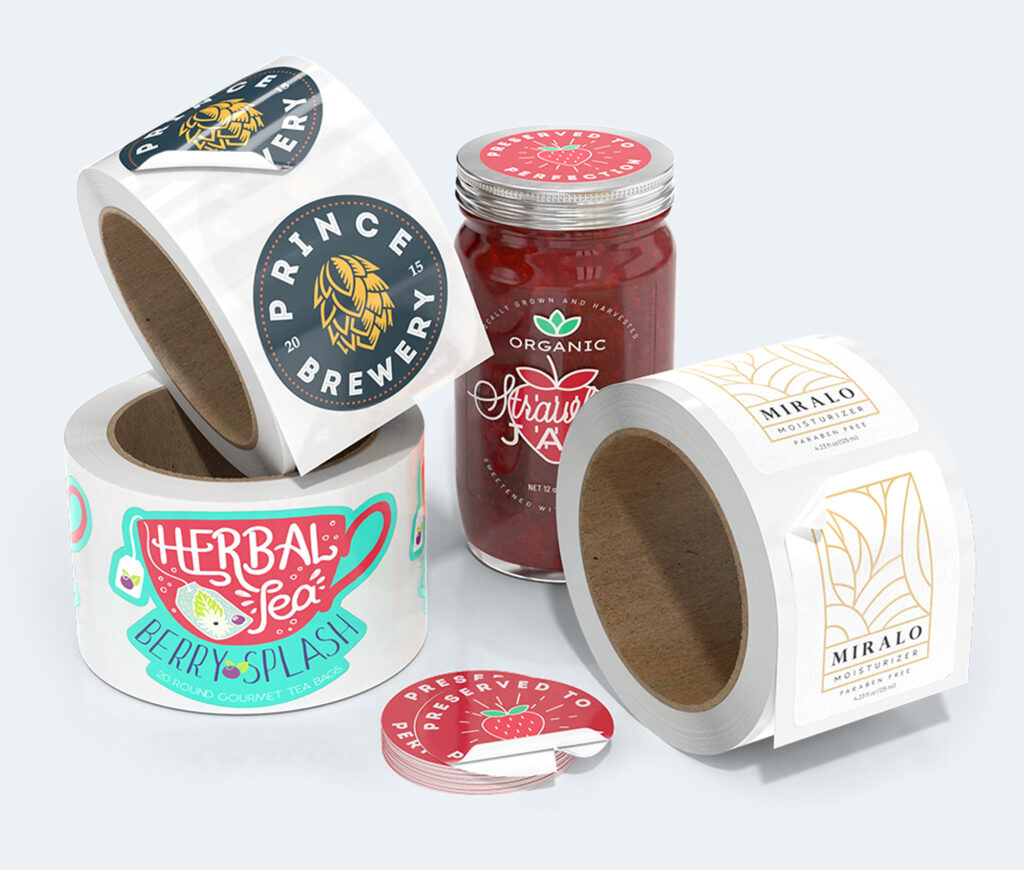
Typical User Groups
Basic-level self-adhesive labels are widely used in:
- Retail and shopping malls (price tags, PLU labels)
- Stores and supermarkets (price gun labels)
- Electronics and component tracking
- Warehousing and logistics
- Daily chemical products
- Biopharmaceutical packaging
These labels generally require variable information printing (VIP), often using electronic scales or thermal printers.
Ⅱ. Intermediate-Level Self-Adhesive Labels
Key Characteristics
Intermediate-level printing plants can handle everything basic-level factories do, plus:
- Higher-quality color printing
- More complex label structures
- Stricter requirements for color matching and consistency
- Medium-level finishing processes
These labels focus on visual appeal and brand consistency, commonly used for consumer products.
Typical User Groups
Mid-tier labels are widely used in:
- Pharmaceutical industry(major demand segment)
- General daily chemical products
- Retail packaging
- Both short-run and long-run jobs
Pharmaceutical labels require high precision and reliability, making them a core category for intermediate-level printing companies.
Ⅲ. High-End Self-Adhesive Labels
Key Characteristics
High-end label products involve more complex production technologies, such as:
- Multi-color rotary printing
- Online UV varnishing
- Rotary hot stamping
- Surface finishing on adhesive materials
- High-precision rotary die-cutting
These processes ensure:
- Accurate color registration
- Premium material selection
- Excellent die-cutting accuracy
- Enhanced durability and shelf appeal
Due to unique printing effects and multiple processing steps, these labels naturally gain anti-counterfeiting properties.
Typical User Groups
High-end labels are typically produced for:
- Premium skincare products
- High-grade lubricants
- Mid-to-high-end daily chemical brands
- High-quality pharmaceutical products
- Food and beverage premium lines
Orders are usually large in volume and stable long-term.
Ⅳ. Premium-Level Self-Adhesive Labels
Key Characteristics
Premium-tier label manufacturing is currently dominated by foreign-invested printing companies in China. They utilize:
- World-class printing machinery
- Advanced European & Japanese processing technologies
- Internationally certified quality management
These companies can produce globally recognized top-tier label products, matching overseas production standards.
Typical User Groups
Premium labels mainly serve:
- International corporations with strict branding standards
- Global FMCG brands
- Large multinational daily chemical and pharmaceutical companies
- Chinese enterprises requiring ultra-high precision and advanced label structures
These labels involve complex construction, high material standards, and extremely strict visual requirements.
Ⅴ. Summary: Understanding Label Printing Tiers in China
Although the industry is divided into four tiers, a company’s tier does not necessarily correspond to its economic benefits. Instead, the tiered structure helps:
- Categorize different market segments
- Guide strategic planning for printing plants
- Help brands choose suitable printing partners
- Improve production efficiency and market positioning
Every label printing company can adopt the tier most suitable to its equipment level, technological capability, and target customer group.