
As information exchange becomes increasingly frequent, the security of product data transmission and brand authentication faces serious challenges. Counterfeit and substandard products cause significant harm across health, finance, trade, consumer markets, and the Internet of Things. To address these issues, adding anti-counterfeiting labels to product packaging has become one of the most effective protection methods.
Below is a detailed explanation of what anti-counterfeiting labels are, what characteristics they possess, and what functions they provide.
1. What Are Anti-Counterfeiting Labels?
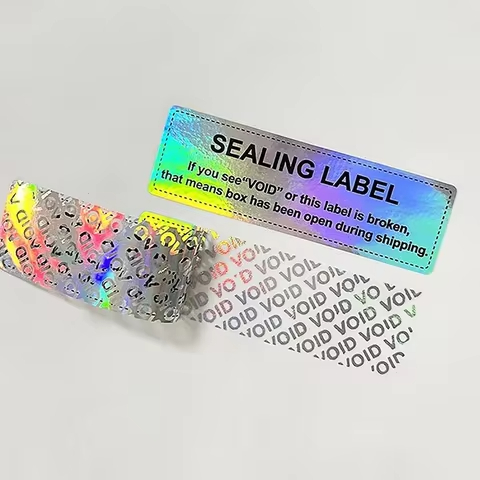
Anti-counterfeiting labels are specialized identification marks applied to product surfaces, packaging, or accessories (e.g., product tags, warranty cards, certificates) that help verify product authenticity.
They may feature technologies such as:
- QR codes
- Scratch-off coatings
- Holograms
- Digital authentication codes
- Tamper-evident materials
- NFC / RFID chips
These labels help prevent counterfeiting and ensure secure product identification.
2. Characteristics of Anti-Counterfeiting Labels
(1) One-time Use
Most anti-counterfeiting labels are designed for single-use verification.
Typical behaviors include:
- Scratching off a coating to reveal a hidden code
- Peeling a label that cannot be reapplied
- Scanning a unique QR code that becomes invalid after verification
Once used, the code cannot be queried again. This prevents reuse or replication.
(2) Real-time Verification
Consumers can:
- Call the phone number printed on the label
- Scan a QR code
- Enter the code online
Verification results are instantly recorded in the brand’s database.
This real-time feedback allows companies to:
- Track suspicious queries
- Identify abnormal regions or retail points
- Quickly recall problematic products and stop distribution
(3) High Sensitivity
Every anti-counterfeiting label contains a unique identification code assigned to each product.
While packaging can be imitated, digital authentication codes cannot be easily replicated.
This sensitivity helps:
- Consumers identify counterfeit goods
- Brands identify unauthorized sales channels
- Improve traceability
(4) Easy and Convenient for Consumers
Consumers do not need any professional knowledge.
Authenticity can be verified simply by:
- Scanning a QR code
- Calling a hotline
- Using an app or WeChat Mini Program
This convenience greatly increases usage and trust.
(5) Facilitates Uniform Product Management
Each product receives a unique serial number, allowing companies to:
- Track production batches
- Monitor supply chain flows
- Manage sales regions
- Analyze consumption data
This improves transparency and operational efficiency.
3. Functions of Anti-Counterfeiting Labels
Anti-counterfeiting labels serve several important business and consumer functions:
(1) Brand Protection and Anti-Counterfeiting
Advanced anti-counterfeiting technologies make replication difficult and costly, effectively preventing:
- Fake products
- Unauthorized resale
- Gray-market distribution
This helps businesses:
- Maintain market share
- Protect brand reputation
- Reduce consumer complaints and risks
(2) Enhancing Marketing and Product Communication
Anti-counterfeiting labels can include:
- QR codes linking to official websites
- Product information pages
- Promotions and coupons
- After-sales service portals
- Social media integration
Scanning the code provides consumers with more product information and increases brand engagement.
(3) Supply Chain and Channel Management
New-generation anti-counterfeiting technologies include traceability and sales tracking, allowing businesses to monitor:
- Regional product distribution
- Unauthorized sales
- Real-time market trends
- Counterfeit hotspots
This allows companies to make faster, more targeted business decisions.
(4) Reduced Anti-Counterfeiting Costs and Resource Waste
With digital anti-counterfeiting systems:
- Market research becomes more accurate
- Monitoring no longer requires large manpower
- Counterfeit detection becomes automated
- Losses caused by fake products are significantly reduced
This leads to lower operational costs and better business efficiency.
Anti-counterfeiting labels are a powerful tool for modern brands, providing:
- Brand protection
- Supply chain transparency
- Consumer trust
- Marketing capabilities
- Data-driven product management
As technology evolves—especially in digital authentication, blockchain traceability, and smart labels—anti-counterfeiting solutions will continue to play an increasingly critical role in global product security.