
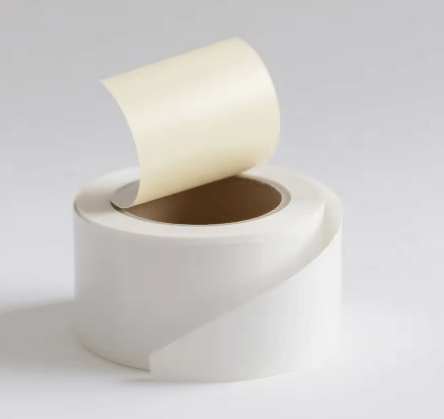
How Conductive Reinforced PTFE Stickers Are Transforming STEM Learning and Flexible Circuit Design
In recent years, the demand for DIY electronics, STEM education tools, and rapid prototyping materials has grown dramatically. Makers, students, engineers, and educators are constantly seeking ways to build electronic projects quickly, safely, and with minimal equipment. This shift has driven the rise of new technologies that simplify circuit building—including the innovative conductive reinforced PTFE stickers, also known as flexible printed circuit adhesive labels.
These cutting-edge materials combine conductive pathways, flexible PTFE substrates, and strong adhesive backing, allowing users to create functional circuits without soldering, wires, or complex tools. Whether you’re building a school circuit project or designing a wearable sensor prototype, conductive PTFE stickers are redefining the entry point for hands-on electronics.
What Are Conductive Reinforced PTFE Stickers?
Conductive reinforced PTFE stickers are thin, flexible sheets of polytetrafluoroethylene (PTFE) combined with conductive layers such as copper, carbon, or silver ink. Unlike traditional wiring, these stickers are:
- Flexible (can be bent, folded, or shaped)
- Self-adhesive (stick to cardboard, plastic, PCBs, paper, textiles, etc.)
- Safe for beginners (low-voltage use, no soldering required)
- Extremely durable (heat-resistant, wear-resistant, and stable)
They function like miniature flexible printed circuits (FPC) but are accessible to hobbyists and students, not just engineers and manufacturing facilities.

Why PTFE? The Science Behind the Material
PTFE (Polytetrafluoroethylene) is one of the most chemically stable and temperature-resistant materials in the world. It is widely used in aerospace, industrial electronics, and medical devices.
Key technical advantages:
1. High Electrical Stability
PTFE has a very low dielectric constant, allowing clean, low-loss signal transmission.
2. High Heat Resistance
Ideal for projects involving sensors, LEDs, motors, or light heating elements.
3. Flexibility + Strength
Its mechanical structure allows repeated bending without cracking.
4. Chemical Resistance
Safe for classroom, lab, and craft environments.
When combined with conductive layers, PTFE becomes the perfect base for flexible adhesive circuits.
How Conductive PTFE Stickers Are Used in DIY Electronics
These stickers open the door to countless creative electronic applications. Here are the most popular use cases:
1. Building Circuits Without Soldering
One of the biggest barriers for beginners is soldering. With conductive PTFE stickers:
- No soldering iron
- No hot tools
- No fumes
- No wire stripping
- No safety risk
Users can simply attach components directly to the sticker’s conductive traces, making electronics more accessible than ever.
2. Prototyping Smart Wearables
Wearable electronics require lightweight and flexible circuits. Conductive PTFE labels are perfect for:
- Clothing-embedded LEDs
- Fitness sensors
- Motion trackers
- Smart fabric experiments
They bend naturally with the material, making testing easier and faster.
3. Classroom STEM Experiments and Educational Kits
Teachers often struggle to provide safe, engaging electronics activities. These stickers solve that:
- Safe low-voltage circuits
- Reusable and removable
- Intuitive and visual
- Perfect for group projects
Students can learn circuits, conductivity, sensors, and engineering concepts hands-on.
4. Robotics and Moving Mechanisms
Robots require circuits that can bend and move. Traditional wires break or disconnect. Conductive PTFE stickers allow:
- Smooth, flexible signal paths
- Lightweight designs
- Easy repairs and modifications
Ideal for robotic arms, wheels, mechanisms, and servo-based systems.
5. Rapid Prototyping for Engineers and Makers
Engineers use these stickers for:
- Quick PCB layout tests
- Sensor pad designs
- Low-voltage circuit evaluation
- Contact pads
- Touch sensors
- Soft switches
They drastically reduce time spent soldering, wiring, or building temporary circuits.
Key Benefits That Make PTFE Circuit Stickers a Game Changer
✔ Flexible Printed Circuit Performance for a Fraction of the Cost
Users can experiment with FPC-level flexibility without expensive manufacturing.
✔ Easy for Beginners, Powerful for Experts
Teachers love them. Engineers use them professionally.
✔ Compatible With LEDs, Sensors, Microcontrollers (Arduino, Micro:Bit, ESP)
Open-source hardware integration makes them ideal for modern electronics.
✔ Great for Science Fairs & STEM Competitions
Students can build visually impressive, functional prototypes.
✔ Strong Adhesion on Many Surfaces
Paper, plastic, PCB boards, cardboard, textiles, and more.
✔ No Tools Required – Truly Plug-and-Play
Perfect for fast prototyping and creative engineering.
Popular Project Ideas Using Conductive PTFE Stickers
- LED greeting cards
- Paper-based light circuits
- Wearable fitness trackers
- Touch-sensitive panels
- Mini robotic cars
- STEM classroom kits
- Smart bookmarks with LEDs
- Interactive posters
- Prototype flexible sensors
- Arduino sensor modules
Who Benefits Most? Target Users
Students & STEM Programs
Learn electronics in a safe and fun way.
Makers & Hobbyists
Create faster, cheaper, and with more flexibility.
Engineers & Product Designers
Prototype complex electronics without waiting for PCB fabrication.
Teachers & Schools
Simplify lesson planning and improve student engagement.
DIY Craft Creators
Combine art with electronics for unique interactive designs.
Tips for Using Conductive PTFE Circuit Stickers Effectively
- Keep circuits low voltage (ideal: 3V–9V).
- Avoid connecting motors with extremely high current directly.
- Use coin cells or USB-powered microcontrollers.
- Reinforce connections with copper tape if needed.
- Store stickers flat and dust-free.
These tips ensure stable conductivity and long-lasting performance.
The Future of Electronics Is Flexible, Accessible, and Hands-On
Conductive reinforced PTFE stickers represent a new generation of accessible electronics tools. By combining flexible circuit design, strong adhesion, and high conductivity, they empower everyone—from beginners to engineers—to explore, invent, and prototype without limitations.
As STEM education continues to grow globally, these stickers will become a standard tool in classrooms, makerspaces, and prototyping studios. Whether you’re building an LED card or designing a wearable sensor, PTFE conductive stickers are a simple, powerful, and exciting way to bring electronic ideas to life.